What, according to John Fiske, is the difference between story & narrative and how is this especially evident in trailers?
 |
| John Fiske |
The relationship between story and narrative is different in trailers due to their length and the primary purpose of persuading an audience into watching the full film; whereas in feature length films the narrative shapes the story in a completely different way to convey the sequence of events.
28 Weeks Later is a horror where the narrative suggests that time has passed between the films. At the beginning we assume that on the surface their world seems calm and better than before, however something hideous has happened to the children’s mother. We do not know what, but we create our own ideas of her death. The trailer's narrative then shows a series of clips highlighting the zombie take over, but does not give away the final resolution or indeed the opposite, again persuading us to see the film.
Who was Roland Barthes and what do his narrative codes propose about the structure of media texts and our reading of them?

Barthes was a French literary theorist, philosopher, critic, and semiotician. Barthes' ideas explored a diverse range of fields and he influenced the development of schools of theory including structuralism, semiotics, social theory, anthropology and post-structuralism, which he wrote about in his many books that were published.
Barthes believed media texts are essentially Capitalist. Designed by the ruling class (Hegemonic model) to extract money and impose their ideas onto the audience.
Bathes described texts as: "a galaxy of signifiers, not a structure of signifiers; it has no beginning; it is reversible; we gain access to it by several entrances, none of which can be authoritatively declared to be the main one; the codes it mobilizes extend as far as the eye can read, they are indeterminable...the systems of meaning can take over this absolutely plural text, but their number is never closed, based as it is on the infinity of language..."
Barthes is basically saying that texts can have many different potential meanings and are polysemic, thus giving the audience more power. There are many points of view texts can be seen from, and therefore meaning no text is linear.
There are two types of texts, an open text is a text with many different meanings and a closed text is a text with one obvious meaning. Examples of this include a cliff-hanger at the end of a film giving different meanings e.g. “I think the main character will live” etc. Preferred readings however are prevalent in trailers where the creators want the audience to read certain meanings into the text. This will change in specific genres such as Rom Coms where romantic scenes are shown and the best parts are shown to make it look like the best it can be.
 |
| This is an enigma code as we wonder where he is going |
Barthes’ theory of narrative codes can be categorized in the following ways:
Enigma codes are something the audience does not know and creates questions that the audience form in their head.
Action codes are something the audience knows and don't need explaining (e.g. packing a suitcase in a hurry connotes running away) they are the more obvious things.
Semic codes are hints connoting different concepts like wealth and death etc
 |
| Money is a Semic code as it connotes wealth. |
Referential codes look at the audience’s wider cultural knowledge, morality and ideology
Narrative codes allow the audience to essentially break down what is happening on screen and link different parts together to form their own understanding of the narrative.
This is pivotal in trailers as the audience must piece together the desired reading that the director wants during a just a brief time. So instead of relatively definite signifiers, teams behind trailers make abundant use of Barthes' codes to illustrate the desired interpretation, though obviously only spoon feeding the plot in an attempt to intrigue them.
The film trailer for Se7en show most of, if not all of Bathes’ codes.
Semic – Morgan Freeman holding a handgun hints that the film will contain violence and death.
Symbolic – Good versus Evil and how the protagonist will solve the case and overcome the villain.
Referential – Audiences morality as to what is right and what is wrong e.g. should Freeman kill the villain, try to solve the case or retire? Etc.
Action – Character falling off a building means he may injure himself
Enigma – Who is Freeman’s character and what is his background?
Who was Vladimir Propp, what structural theory did he propose and how are his ideas evident in trailers? Which of his characters appear most frequently and does this cross genres or are there differences?
Vladimir Propp was a media theorist, born in Russia in 1895. He analysed over 100 folk tales and found a trend that certain characters appear repeatedly in all the tales.
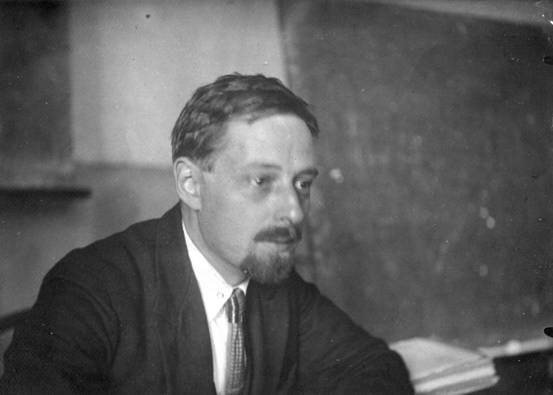 |
| Vladmir Propp. |
Propp pioneered the Archetypal characters theory through research into more than 400 Russian folklore books. His theory is useful because it avoids treating characters as if they are individuals and reminds us that they’re merely constructs. Some characters are involved just to progress the narrative.
Recurring characters are ones such as the:
• Hero (or Heroine)
• Villain
• The Gift Giver
• The Sender
• The False Friend
• The Helper
• The Damsel in Distress.
Below, we can see it is useful even today in modern film. Star Wars for example contains these character types:
• Hero – Luke Skywalker
• Damsel in Distress – Princess Leia
• The Helper – Han Solo
• The Villain – Darth Vader
• The Sender – Obi Wan
• The Gift Giver – Yoda
Most folk tales and Superhero films contain the majority of the common Proppian characters, most notably the heroes and villains; this is because there would be no need for a superhero if there was nothing to fight against/ for.
The characters which appear most in film trailers no matter what genre are the ‘heroes’ and the ‘villains’. This is due to the fact that it makes the film involve some form of competition which makes the film more interesting for the viewer to watch. It also follows tradition from books and fairy-tales. There is usually a damsel in distress of some sort, but it isn’t a necessary component.
In different genres such as comedy films, Proppian characters still occur but not all of the same ones appear. In the trailer for the hangover, there are the heroes such as the 3 main protagonists and the villain who is Mr Cheung who kidnapped their friend Doug. Doug in this case would be the ‘Damsel in Distress’ which is strange because in most cases the damsel in distress in usually a female as they are seen as the more dependant gender. Also Doug's wife would be the sender in this case as they are getting married so he is sent on a stag party.
 |
| Tvzetan Todorov. |
Who is Tzvetan Todorov, what does his narrative theory propose about the structure of media texts and how is this relevant to film trailers?
Russian theorist, Tzvetan Todorov, suggests that all narratives follow a three part structure. They begin with equilibrium, where everything is balanced, progress as something comes along to disrupt that equilibrium, and finally reach a resolution, when equilibrium is restored.
This simple formula can be applied to virtually all narratives - it is a more formal way of thinking about the beginning, middle and end, and it takes into account that all drama is conflict i.e. there is disequilibrium at the heart of every narrative.
Who was Claude Levi-Strauss and what relevance does his theory have to the creation of meaning within trailers?
 |
| Claude Levi-Strauss |
He realised that words purely act as symbols for society's ideas and the meaning of words, therefore, he believed that they was a relationship between opposing ideas.
Binary oppositions can be found in a range of media products such as a film trailers.
Good vs Evil, this is particularly shown in genres such as action and thrillers.
Dark vs Light, this is again shown in action/thriller/horror films.
Protagonist vs Antagonist, this too can be shown in action/thriller
Past vs Future, this can be shown in action and history
Feminine vs Masculine this is particularly seen in horror/ thriller films as females are generally seen as being victims and males are seen to be killers.

No comments:
Post a Comment