Thursday, 12 July 2012

Structural Theory and Theorists


What, according to John Fiske, is the difference between story & narrative and how is this especially evident in trailers?                                                                                              

John Fiske
John Fiske’s theory of Narrative vs. Story explains that they are two different units: The narrative is the aspects of the story shown through the piece of media, the story is the same, but also includes the aspects of the story not shown and that we infer occur in the time between shots.  The narrative shown can manipulate our ideas and perception of the story as a whole.  The way a film maker presents things, dictates our opinions of certain events or characters.  This is very closely linked to semiotically analysing a still image or frame. A prominent film that plays with this idea is Pulp Fiction, which is saliently not chronological and jumps between different times in the narrative, completely warping our perception of the story. So, for instance, although we see Vincent Vega die in the film, because he is alive at the end of the narrative (due to a jump back in time) our feelings for him are not distinctly poignant and are in fact quite the opposite given the comic nature of the final scene. 

The relationship between story and narrative is different in trailers due to their length and the primary purpose of persuading an audience into watching the full film; whereas in feature length films the narrative shapes the story in a completely different way to convey the sequence of events.

28 Weeks Later is a horror where the narrative suggests that time has passed between the films. At the beginning we assume that on the surface their world seems calm and better than before, however something hideous has happened to the children’s mother.  We do not know what, but we create our own ideas of her death.  The trailer's narrative then shows a series of clips highlighting the zombie take over, but does not give away the final resolution or indeed the opposite, again persuading us to see the film.

Who was Roland Barthes and what do his narrative codes propose about the structure of media texts and our reading of them?


Barthes was a French literary theorist, philosopher, critic, and semiotician. Barthes' ideas explored a diverse range of fields and he influenced the development of schools of theory including structuralism, semiotics, social theory, anthropology and post-structuralism, which he wrote about in his many books that were published.

Barthes believed media texts are essentially Capitalist. Designed by the ruling class (Hegemonic model) to extract money and impose their ideas onto the audience.

Bathes described texts as: "a galaxy of signifiers, not a structure of signifiers; it has no beginning; it is reversible; we gain access to it by several entrances, none of which can be authoritatively declared to be the main one; the codes it mobilizes extend as far as the eye can read, they are indeterminable...the systems of meaning can take over this absolutely plural text, but their number is never closed, based as it is on the infinity of language..."

Barthes is basically saying that texts can have many different potential meanings and are polysemic, thus giving the audience more power. There are many points of view texts can be seen from, and therefore meaning no text is linear.

There are two types of texts, an open text is a text with many different meanings and a closed text is a text with one obvious meaning. Examples of this include a cliff-hanger at the end of a film giving different meanings e.g. “I think the main character will live” etc. Preferred readings however are prevalent in trailers where the creators want the audience to read certain meanings into the text. This will change in specific genres such as Rom Coms where romantic scenes are shown and the best parts are shown to make it look like the best it can be.
This is an enigma code
 as we wonder where he is going

Barthes’ theory of narrative codes can be categorized in the following ways:

Enigma codes are something the audience does not know and creates questions that the audience form in their head.

Action codes are something the audience knows and don't need explaining (e.g. packing a suitcase in a hurry connotes running away) they are the more obvious things. 

Semic codes are hints connoting different concepts like wealth and death etc

Money is a Semic code as it connotes wealth.
Symbolic codes are structures which organize meaning such as binary opposites e.g. Good vs Evil

Referential codes look at the audience’s wider cultural knowledge, morality and ideology

Narrative codes allow the audience to essentially break down what is happening on screen and link different parts together to form their own understanding of the narrative.

This is pivotal in trailers as the audience must piece together the desired reading that the director wants during a just a brief time. So instead of relatively definite signifiers, teams behind trailers make abundant use of Barthes' codes to illustrate the desired interpretation, though obviously only spoon feeding the plot in an attempt to intrigue them. 

The film trailer for Se7en show most of, if not all of Bathes’ codes. Se7en Trailer

Semic – Morgan Freeman holding a handgun hints that the film will contain violence and death.

Symbolic – Good versus Evil and how the protagonist will solve the case and overcome the villain.

Referential – Audiences morality as to what is right and what is wrong e.g. should Freeman kill the villain, try to solve the case or retire? Etc.

Action – Character falling off a building means he may injure himself 

Enigma – Who is Freeman’s character and what is his background?


Who was Vladimir Propp, what structural theory did he propose and how are his ideas evident in trailers? Which of his characters appear most frequently and does this cross genres or are there differences?
Vladimir Propp was a media theorist, born in Russia in 1895. He analysed over 100 folk tales and found a trend that certain characters appear repeatedly in all the tales.     
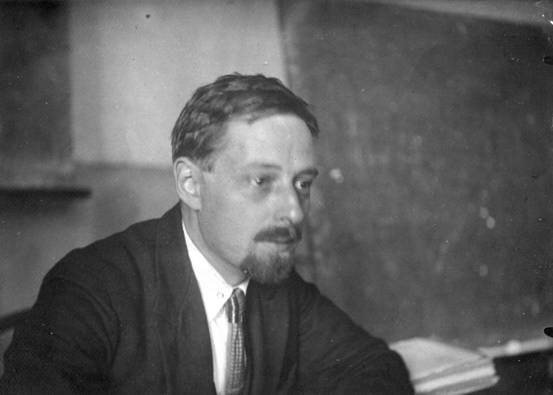
Vladmir Propp.

Propp pioneered the Archetypal characters theory through research into more than 400 Russian folklore books. His theory is useful because it avoids treating characters as if they are individuals and reminds us that they’re merely constructs. Some characters are involved just to progress the narrative.

              Recurring characters are ones such as the:
•       Hero (or Heroine)
•       Villain
•       The Gift Giver
•       The Sender
•       The False Friend
•       The Helper
•       The Damsel in Distress.


Below, we can see it is useful even today in modern film. Star Wars for example contains these character types:

•       Hero – Luke Skywalker
•       Damsel in Distress – Princess Leia
•       The Helper – Han Solo
•       The Villain – Darth Vader
•       The Sender – Obi Wan
•       The Gift Giver – Yoda

Most folk tales and Superhero films contain the majority of the common Proppian characters, most notably the heroes and villains; this is because there would be no need for a superhero if there was nothing to fight against/ for. 

The characters which appear most in film trailers no matter what genre are the ‘heroes’ and the ‘villains’. This is due to the fact that it makes the film involve some form of competition which makes the film more interesting for the viewer to watch. It also follows tradition from books and fairy-tales. There is usually a damsel in distress of some sort, but it isn’t a necessary component.

In different genres such as comedy films, Proppian characters still occur but not all of the same ones appear. In the trailer for the hangover, there are the heroes such as the 3 main protagonists and the villain who is Mr Cheung who kidnapped their friend Doug. Doug in this case would be the ‘Damsel in Distress’ which is strange because in most cases the damsel in distress in usually a female as they are seen as the more dependant gender. Also Doug's wife would be the sender in this case as they are getting married so he is sent on a stag party.
Tvzetan Todorov.

Who is Tzvetan Todorov, what does his narrative theory propose about the structure of media texts and how is this relevant to film trailers?

Russian theorist, Tzvetan Todorov, suggests that all narratives follow a three part structure. They begin with equilibrium, where everything is balanced, progress as something comes along to disrupt that equilibrium, and finally reach a resolution, when equilibrium is restored.

This simple formula can be applied to virtually all narratives - it is a more formal way of thinking about the beginning, middle and end, and it takes into account that all drama is conflict i.e. there is disequilibrium at the heart of every narrative.

For example in Attack the Block the equilibrium is an estate and block of flats that a gang owns, then the disruption is that aliens invade and the people on the estate must work together to fight off the aliens. The resolution is that the main character and leader of the gang Moses ignites a gas fuelled room, thus saving the estate and potentially the world. The new equilibrium is that the residents of the block now see the gang as heroes.

Who was Claude Levi-Strauss and what relevance does his theory have to the creation of meaning within trailers?

Claude Levi-Strauss
Claude Levi-Strauss is a French anthropologist, his theory was that the way we understand certain words  doesn’t depend on the meaning it creates but more on our understanding of the difference between the word and its 'opposite'  which is called a 'binary opposition'.

He realised that words purely act as symbols for society's ideas and the meaning of words, therefore, he believed that they was a relationship between opposing ideas.

Binary oppositions can be found in a range of media products such as a film trailers.

Good vs Evil, this is particularly shown in genres such as action and thrillers.
Dark vs Light, this is again shown in action/thriller/horror films.
Protagonist vs Antagonist, this too can be shown in action/thriller
Past vs Future, this can be shown in action and history 
Feminine vs Masculine this is particularly seen in horror/ thriller films as females are generally seen as being victims and males are seen to be killers.


Monday, 2 July 2012

Trailer Conventions Initial Research


Action

The Dark Knight

The Dark Knight Trailer: Click here.

Proppian archetypal characters, saliently the hero, villain and damsel in distress/love interest are introduced. Due to the brevity of the trailer format cuts certain shots, such as intentionally angled shots for desired interpretation along with fast paced editing and short fade to black transitions, are used to make it easy for the audience to assume each role. These given examples are all particularly prevalent in action and similarly genre film trailer. Strauss’ theory of binary oppositions is also a prevalent and frequent theme in action trailers; examples include peace and war, night and day, evil and good and so on. The narrative elements that manipulate the plot devices in action trailers are often non chronological and grouped together according to similarity i.e. peaceful equilibrium all together, then disruption altogether. The influence of the narrative in action trailers also enthrals the audience and gives a level of narrative exposition such as characters and subtle suggestions as to what may happen in the actual feature. Equilibrium and a subsequent disruption portrayed in action trailers are used to enhance the enigma. 


Use of humour is conventional within many action trailers and action comedies, especially in the form of dark comedy. Humour is often presented at the very climax of a trailer or equally at the end of a segment of the trailer for instance at the very end of the Dark Knight trailer where Michael Caine's character expresses sarcasm. An example of humour given at the end of a segment of a trailer can also be found in the Dark Knigth trailer where once again Michael Caine's character lends an ironic joke. This also ties in with the aforementioned John Fiske narrative theory and how the narrative choices drive us to make the desired assumptions about a character and then confirm their Proppian archetype. Variety in location and shots are used to convey how epic the feature is whilst hopefully tantalising the senses of even the most sagacious audience looking to be entertained.


If a typical sonorous, authoritative male "voice over" isn’t used in an action trailer then more often than not there will be a mix of on and off screen diegetic dialogue from the film to provide an equally effective narrative exposition. The off screen voice of the joker is unsettling and provides a voice over like narration. Enigmas as to how Batman will fight back and overcome adversity. Other common conventions include institutional information, release date, website and the film title with ominous music at the end. The non diegetic music used is often from the original soundtrack from the film and is generally orchestral or, in some cases, includes classic rock/metal songs to evoke the same feelings a stirring orchestral piece would, in correspondence with a CGI and explosion saturated trailer. This is recognised in film such as the Bond series that normally use the films own unique main theme in the trailers. Other common conventions include an accumulation of soundtrack and Foley sound ending in a fantastic crescendo accompanied by institutional information, release date, website and the film title at the very end of a trailer. 'From the makers of' is also used to give familiarity and a reliability to the film, usually including the mention of successful franchises such as Alien for James Cameron as is used in the Avatar trailer. There is often the inclusion of big name stars and directors, giving the same effect. There are also, on occasion, the mention of similar films either in brief critic comments or the team behind the production in the trailer have been a part of similar productions though this appears to be more present in comedie i.e spoof comedies such as the Scary Movie series and extensions like Epic Movie. This is playing on the use of talent to market a media product whilst acting as consolidation for the audience as it seemingly ensures that the film will be worth watching. This feature is consistent with other walks of film talent such as big name actors and writers.


Comedy

American Pie: Reunion
American Pie Trailer: Click Here.


American Pie: The Reunion is a comedy film and a sequel to a film franchise. The trailer begins slow paced at the beginning but then speeds up as soon as what the film is becomes clear. The music then cuts in with some popular music to attract a new modern audience. The editing then cuts to different shots revealing all the different main characters and ones which are going to effect the film. Due to it being a comedy film, the trailer involves some of the comedy moments in the film using both dialogue and actual clips. The institutional logo of the film then came up showing that Universal Studios produced it. It then reveals romance in the film which allows you to get a feel of the narrative and sub-genre of the film. The films name then comes up following the basic conventions. Finally, it ends with the website address and links to social networking sites to allow the audience to search up on the film and share it with their friends and allowing it to go viral.


What is particularly interesting about this trailer is that it consists largely of tropes resonant of the previous films, that were Coming of Age Teen Comedies, and yet incorporates comedy elements suitable for comedies aimed at adults. This is because the series is clearly trying to transcend from of the Coming Of Age genre into a 'Of Age' genre, as the characters have aged. However, the producers don't want to lose touch with their usual audience and so keep the comedy as OTT and appropriate to teen comedies.  


Due to it being a comedy film, the trailer involves some of the comedy moments in the film using both dialogue and actual clips. The institutional logo of the film then came up showing that Universal Studios produced it. It then reveals romance in the film by playing some soft, low tempo'd music whilst showing couples together which allows you to get a feel of the narrative and sub-genre of the film. The films name then comes up following the basic conventions. Finally, it ends with the website address and links to social networking sites to allow the audience to search up on the film and share it with their friends and allowing it to go viral.


Pulp Fiction (dark comedy/thriller)
Music from the soundtrack is used to lighten the mood of the trailer, and a voice over talks about the various awards the film has received, with words like loyalty and betrayal in red font on a black background signifying death, murder and blood. Using words like ‘loyalty’ and ‘betrayal’ to give an idea of the plot.
There is also some humour throughout, with frequent soundtrack changes to give variety, and the voiceover says the main cast showing it as ‘all-star’ with Uma Thurman, Samuel L Jackson and John Travolta and many more. The title of the film is shown at the end along with gun shots that we hear with flashes over the title. Institutional information is shown at the end, and the film is made to look ‘retro’.


Bruce Willis

Institutional information is shown at the start, going straight into an action scene with rock music to emphasise how intense the fight scene is with over the top style fighting. A voiceover is used with pink and blue text on a white background which juxtaposes the brutality previously seen. This contrasts with a typical thrillers, and thus we as the audience decipher that the film content will be humorous AND violent - a well known characteristic of Tarantino films. This also reveals the appeal behind the production; the idiosyncratic hybridisation of mature action themes and dark comedy will appeal to a specific audience of adults, preferably male, with a taste for quirkiness, which explains why the film is a cult classic as well as a box office smash. 
Samuel L Jackson and John Travolta

Horror

The Thing

The Thing (2011) is a horror/sci-fi cross over and is a prelude to The Thing(1982). The trailer begins rather slow paced and reveals the institutional logo which is Universal studios. A non-diegetic voice over occurs at the start of the film, but it is using dialogue from the film to narrate the story. The voice over begins to explain what is happening and straight away explains the plot of the film, with it being a creature being discovered. It then cuts to the main protagonist, or who we assume is due to the camera being focused on her more. A cut to the ice in Antarctica where many people are gathered, yet the camera is focused on the ice revealing a creature trapped inside of it. Due to it not being human, you assume that it is the antagonist of the film. They begin to have fun and relax after finding the creature and begin to play the guitar, but the trailer edits to the creatures ice block which has thawed out while the guitar becomes more high pitch and distorted making it more ominous. Then characters begin to die which is a typical convention of horror films, as well as showing lots of blood, panic and suspicion upon the members. The editing gets more fast paced while the tempo of the music speeds up. A tagline appears whilst showing a montage of the film which gives the audience a feeling of wanting more which then ends with the film title coming up with the website address and information about the soundtrack which is a common convention in any film trailer.
This adds credibility to their latest film, especially to the desired audience who will likely recognise 'Dawn Of  The Dead'


A tagline then appears saying 'In A Place Where There Was Nothing. They Found. Something' to enhance the atmosphere of the film but also allows the last tagline to dissolve the 'some' out of 'something' to creatively form the title of the film. During the tagline, a montage of the film is shown in between each line which gives the audience a feeling of wanting more, which then ends with the film title coming up with the website address and information about the soundtrack which is a common convention in any film trailer. The reason for this is that it promotes the film and allows people to go home, search the film title and find a webpage of it immediately and share it with their friends on social networking sites allowing the film to have free publicity.
The main protagonist who is focused on most.

My inference from this is that horror trailers have the tendency to lull the audience into a false sense of security, an equilibrium, and then suddenly deluge them with intense shots of panic, horror and even action to 'get their blood pumping'. The frenetic pace of shots is then either abruptly ended or the pace fades, leaving behind an ambience of dread and eeriness as the institutional information is displayed - hopefully, for the producers, this taste of what's to come is enough to whet the audience's appetite and elevate anticipation within them, so they watch the film.


Fantasy/ Adventure

Lord of the Rings: Return of the King


Following the manipulated institutional logo made to look enveloped in smoke (and mystery?) the trailer begins with a diegetic voice of Legolas explaining something horrific about the antagonists in the film and how they’re becoming stronger, a foreboding sign for the audience. Suddenly fast paced editing creating a montage effect while a non-diegetic voice over occurs stating “the end has come”. The New Line Cinema logo comes on the screen revealing the institution. The main characters are then all shown in different locations whilst cutting to each other revealing the different intertwining plotlines such as a war and carrying ‘the ring’. Showing the plot is a common convention in films as it indicates and highlights what to expect in the film. Orchestral music is played in the background which is common for adventure films as it makes everything more atmospheric. The antagonist is then revealed which happens a lot in film trailers.


The release date is then shown while as a tagline saying ‘The Journey Ends’ appears stating it is the final part of the film. The editing speed picks up once again acting as another little montage revealing a lot of action sequences which is typical of adventure and action related films. There is some use of non-diegetic voice over which appears to use dialogue from the film to emphasize the story as well as the music which speeds up and hits a crescendo. The film’s title appears on the screen against a black background which then gets replaced with the release date of the film and the website for it, which are typical conventions of film trailers. They are used to encourage the audience to find out more information about the film and when it is being shown, as well as giving them a better, more connected experience after they've seen the film. It is also noticeable that the archaic font type of the date is that of the film, which is as recognisable to a fan as the matrix code font is to a fan of that trilogy. 

Avatar
Avatar Trailer: Click Here.


There is plenty of narrative exposition showing the Avatar race and tense music punctuates the fades and transitions to different scenes. Lots of locations are used to show how immense and epic the film is, which accentuate the genre of the film as these are common tropes/elements of the genre of sci-fi action, whilst also showing Todorov’s narrative theory with an equilibrium and then disruption also providing enigma, due to the fact Worthington is now an Avatar.


‘From the makers of’ is also used to give familiarity and a reliability to the film, as big successful franchises such as Alien and Terminator are used, so the audience feel more insured the film will be worth watching. James Cameron is mentioned several times, big name actors are shown, and at the end the title is shown along with a website address. 20th Century Fox and the film maker are shown at the beginning, and the film rating information.
  
As with other genres, the elements of appeal in fantasy/sci fi genres is the spoon-feeding of narrative and character exposition to the point the audience is asking questions that they feel compelled to answer by going to watch the film. What I have found from films of this ilk is that what creates even more appeal than narrative exposition, is how the trailers present enough of the films world, especially Middle Earth in LOTR, to engross the audience, capture their imagination and almost envelop them in the film world to a degree that it is almost palpable. The abrupt end of this 'experience' would surely disappoint the audience and so they want to watch the film to enjoy the full product.  

Once Upon a Time in America


The woman talking about love connotes romance
The trailer begins with a voice over explaining the emotions the film brings out for the audience focusing on the story, showing romance, crime and drama. An orchestral soundtrack plays throughout showing different emotion and ambiguity, leaving it to the audience’s imagination as to what will happen. Propp’s character theory is shown with a hero, the Princess or Prize (the woman he loves) and maybe a false hero to keep the audience guessing.

This shows that the film is set during the 30's due to Prohibition

Robert De Niro is mentioned as a big name actor and then the stylized font is shown a long with the voice over to reinforce it so the audience won’t forget. Then he says ‘rated R’ and institutional information is shown along with more actors and the director.

Institutional information


Trailers Evaluation

  • Institutional information is common throughout and must be included legally with film ratings, directors, actors etc. which can also help sell the film and give reliability as well as familiarity to the audience as they may have seen their past films or follow their careers.
  • Todorov’s narrative theory is also shown; some trailers present more narrative than others, like Pulp fiction shows quite a bit of the story as does Avatar. But Once Upon a time in America shows barely anything, these can both be quite effective methods of reaching audiences and making them interested.
  • Trailers also show the main characters, adhering to Propp with usually a hero and villain, prize and helper. However, some show less than others to present mystery and enigma.
  • All the trailers try to show variety with the scenes they choose e.g. humour, romance, drama and action, they also have a variety of shots, dialogue, sound effects and CGI etc.
  • Binary opposition tends to be shown in darker films like the Dark Knight with good and evil, or juxtapositions in other films like My Wife is a Gangster between action and seriousness with light hearted elements.
  • Trailers also like to show off the film with awards and nominations, as well as previous films and big franchises that the director has done, big name actors and studios, also text to show what the story explores and what emotions it brings out.
  • Enigmas help to give mystery and intrigue into the film which makes it interesting, and the fast paced cuts and epic music combine making most of the film trailers analysed appealing.

 While use of some common conventions is good, the structure of a trailer is sometimes very predictable, and some of the trailers could benefit from less action orientated scenes e.g. Once Upon a time in America uses less action orientated scenes but hints at them with the voice over and a shot of a gun. In addition, most trailers use the best scenes in the film, so when it is seen in full, it is nowhere near as good. It is also worth noting that film industries often employ the skills of external groups to make their trailers as they know have a more proficient knowledge of what to show to an audience, as they themselves are technically an audience. They do use the shots or small scenarios that they find most enthralling which could explain, for instance, why many people complain about ''all the funny bits being in the trailer which spoiled the movie''. This is, however, the fault of the production for either not having a consistently entertaining production with only enough good parts to fill a measly one and a half minute trailer, or for not thinking ahead when they ratified the use of the trailer.
   

 Interactive trailers could engage audiences to find out more information and give more entertainment value. This could be done on Youtube through annotations and links that appear on the trailer at a certain time which perhaps takes you to other videos linking to that event, or seen in Super 8 with a video game attached, and Fast Five which had trailers for each character as they appeared in the main trailer. Websites like IGN also analyse and break down trailers to show parts which the audience may not have seen, with clues to the films plot which are well hidden. Therefore attention to detail in trailers is key to get audiences excited, no matter how recondite. In addition, the fact we are now in an age where social media is ubiquitously popular, interactive trailers are useful for sharing on the internet between friends on such social media sites - such as Facebook and Twitter. Production companies have acknowledged this and use it to their advantage; this is why we see trailers on the internet before we see them on the TV, not only are they easier to broadcast, but often facilitate navigation to sites tied to the production to the convenience of the audience.